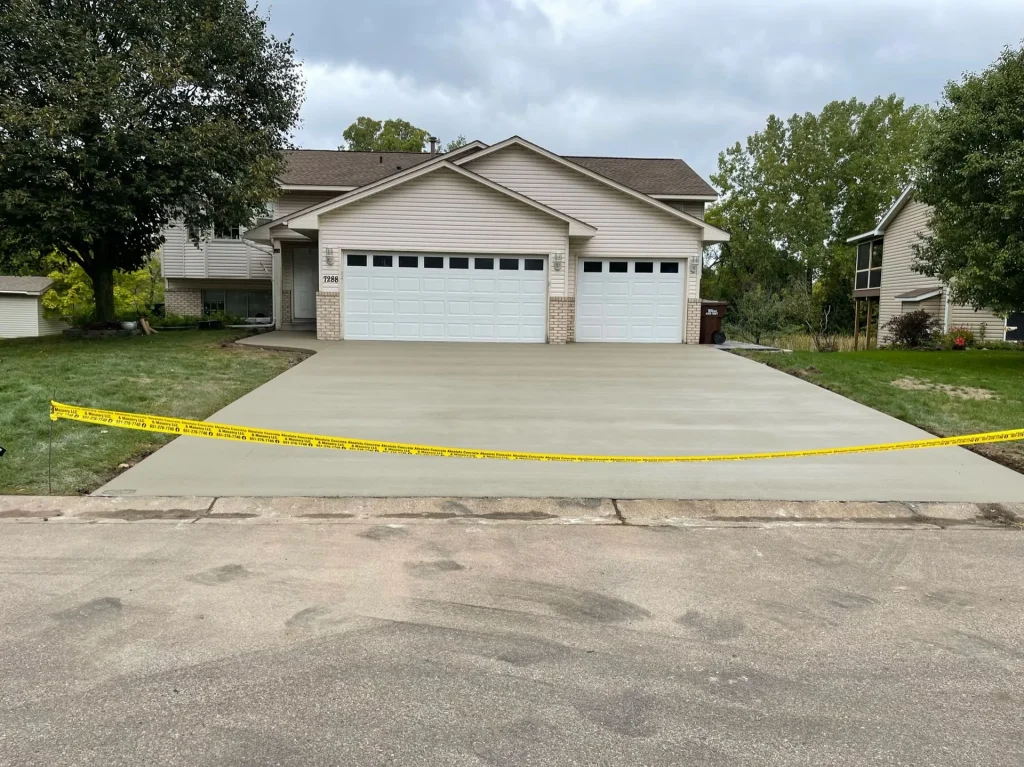
Concrete Driveway Work for Homes Near the Capitol
The neighborhoods surrounding the Minnesota State Capitol are some of the most character-rich in all of St. Paul. Streets like Sherburne Avenue and Carroll Avenue are lined with older homes — many of them built in the early 1900s — sitting on narrow lots with short driveways that connect directly to alley access or street parking. These aren’t sprawling suburban driveways. They’re tight, historically sensitive spaces that require a contractor who knows exactly what they’re working with.
We’re out in this part of St. Paul regularly. And every time we pull up to a job near the Capitol, we’re reminded that this neighborhood doesn’t forgive sloppy work. Concrete is the right material for this area. Hard freeze-thaw cycles hit every winter. Salt from city streets migrates onto residential surfaces, and asphalt softens and ruts under that kind of pressure. Properly installed concrete holds up season after season without the same level of ongoing maintenance. For homeowners near Summit-University and the Rondo corridor, that durability matters — especially when the ground shifts during spring thaw and poor drainage becomes a real problem fast.
One of the most common jobs in this area involves replacing crumbling concrete aprons where the driveway meets the alley. That’s a specific failure point. Older homes near the Capitol often have aprons poured decades ago, sometimes without proper sub-base preparation. Tree roots from mature boulevard elms and ash trees push up the slab edges over time. Water pools at the low spots. The fix isn’t a patch — it’s a full replacement with a graded sub-base and control joints placed to manage future movement.
Lot access is another factor unique to this part of St. Paul. Many homes here don’t have attached garages — detached garages sit at the back of the lot, accessed from the alley. That means the driveway runs the full length of the property, sometimes 80 to 100 feet from the street to the garage door. Sound like your situation? Give us a call and we can walk through what that kind of pour actually involves for your lot. A pour that long needs expansion joints at the right intervals, and the slope has to drain away from the foundation. Plenty of older pours in this area slope the wrong direction, sending water straight toward the basement wall.
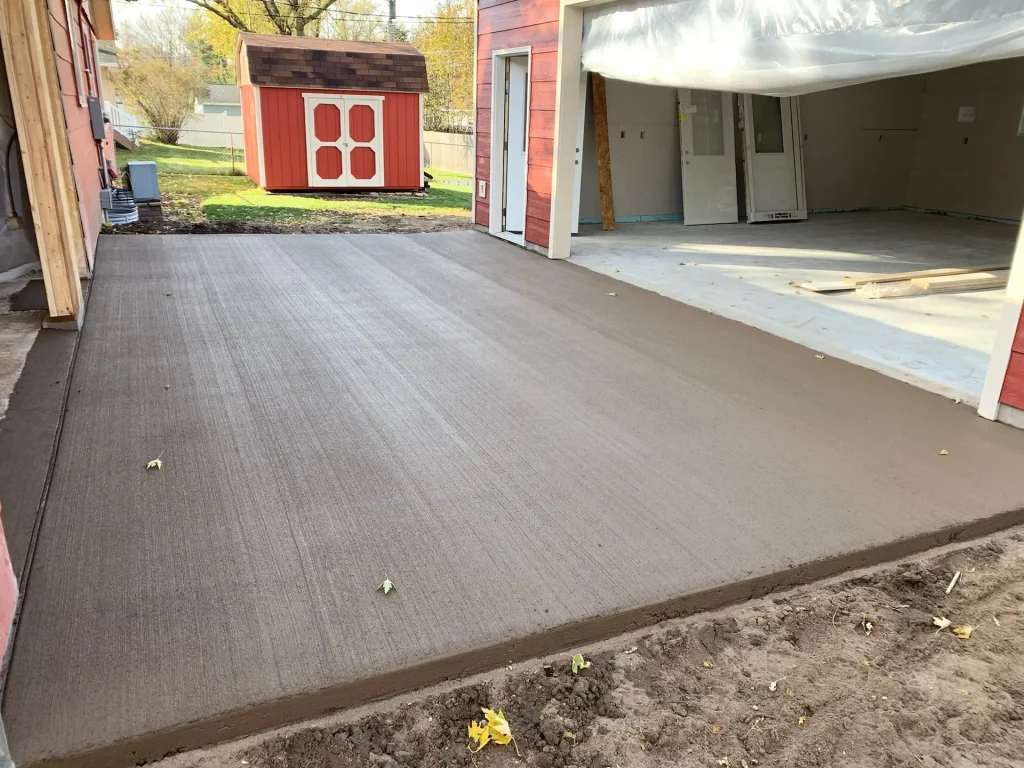
The city of St. Paul has specific permitting requirements for driveway work in older residential neighborhoods. Work near the Capitol area often falls under review for impervious surface coverage, especially on smaller lots. Knowing those requirements before the first shovel goes in saves time and prevents costly rework. We pull the right permits and communicate with city inspectors so the project moves forward without delays.
Timing matters too.
Homeowners in the blocks immediately east and west of the Capitol grounds deal with heavy foot and vehicle traffic during legislative sessions. Scheduling concrete work during a quieter window — late spring or early fall — means fewer disruptions during the cure period. Fresh concrete needs time to harden without heavy traffic rolling over it. In a dense neighborhood like this one, timing the pour correctly is part of doing the job right.
Replacing a cracked slab on Arundel Street or pouring a new driveway off the alley on Dayton Avenue — the work here calls for someone who knows these lots, these soils, and what St. Paul winters actually do to concrete over time. We’ve done enough of it in this neighborhood to know where the problems hide before we even start digging.
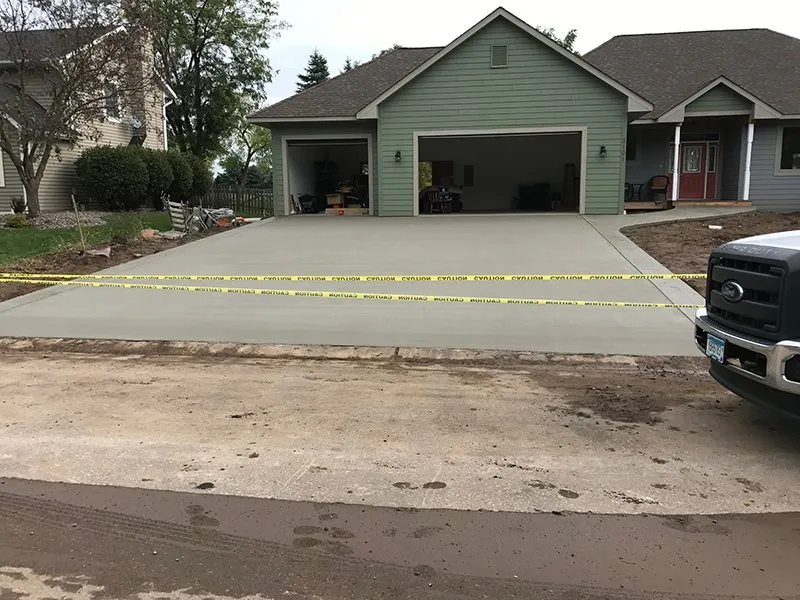
Lot sizes near the Capitol also tend to be narrow and deep, following the original city plat from the late 1800s. Driveways on these lots are often single-car width with tight turns off the alley or street. Forming and finishing concrete on a 9-foot-wide driveway with a fence on one side and a neighbor’s garage on the other — that takes a different approach than an open suburban pour. Expansion joints need to be placed carefully to account for the confined space and the way heat builds between structures in summer. Getting those details right makes the difference between a driveway that looks clean for 20 years and one that cracks along the edges within the first few seasons.
And then there’s the permit question.
Permit requirements through the City of St. Paul apply to most driveway replacement projects in this area. Work near the Capitol district often falls within city right-of-way boundaries, which means a Right-of-Way permit from Public Works may be required before any excavation begins. Homeowners on blocks between the Capitol and Cathedral Hill should confirm whether their apron — the section connecting the driveway to the street — falls within city jurisdiction. This step gets skipped in other markets but is standard practice for any legitimate concrete job in St. Paul’s older residential corridors. We’re licensed through the state of Minnesota and have been pulling permits in this zip code long enough that it doesn’t slow us down.
How Our Team Reaches the Capitol Heights Area
Historically layered ground. That’s what you’re dealing with near the Minnesota State Capitol. Streets like University Avenue and Rice Street cut through blocks where homes were built in the early 1900s — long before modern concrete standards existed. Many driveways in this area are original poured slabs or crumbling asphalt patches repaired so many times the base is no longer sound. Your driveway has likely been through decades of freeze-thaw cycles that most other parts of the country never see.
Minnesota winters are hard on concrete everywhere. But this area carries a specific challenge tied to dense urban infrastructure — the city’s aging water and sewer lines run close to the surface on many residential blocks between the Capitol and the Frogtown neighborhood to the west. Tree roots from mature boulevard elms and maples push up through sub-bases and crack slabs from underneath. Most of the homes along these blocks were built before anyone was thinking about root barriers or engineered sub-bases — and it shows. A new concrete driveway here needs proper excavation and a solid compacted base. Not just a pour over whatever is already there. Skipping that step is exactly why so many driveways in older St. Paul neighborhoods fail within five to ten years. Homeowners who want to extend the life of their driveway need to start with the right foundation — not just the right surface.
So consider what surrounds you.
The Capitol complex draws heavy traffic along John Ireland Boulevard and Constitution Avenue year-round. Snowplows and salt trucks run those corridors constantly from November through March. If your driveway connects to a side street off one of those routes, you’re dealing with salt runoff and heavy vehicle vibration that accelerates surface scaling. Concrete mix design matters here — a higher PSI mix with a low water-to-cement ratio holds up better against the deicing chemicals the city uses on Capitol-area roads. That’s not a detail relevant to a quiet suburban cul-de-sac. It’s specific to living close to a major civic hub that stays active all winter. If you’re near the intersection of John Ireland and Sherburne, we can usually be on-site within 20 minutes — and we already know what that block is working against.
frequently asked questions
Yes, we work in those blocks regularly. Streets like Sherburne Avenue and Carroll Avenue are part of our normal service area. We schedule around legislative session traffic and plan pours during quieter windows so fresh concrete isn't disturbed. If you're near the Capitol grounds, we can usually be on-site within 20 minutes.
Tree roots are usually the cause. Mature boulevard elms and maples along these older blocks push up through the sub-base and crack slabs from underneath. Most homes near the Capitol were built before anyone used root barriers or engineered bases. A proper replacement means full excavation and a compacted sub-base — not just a new pour over the old one.
It's very common here. Many homes near the Capitol don't have attached garages, so the driveway runs 80 to 100 feet from the street to a detached garage at the back of the lot. That length needs expansion joints at the right intervals and a slope that drains away from your foundation — not toward it, which is what many older pours in this neighborhood do.